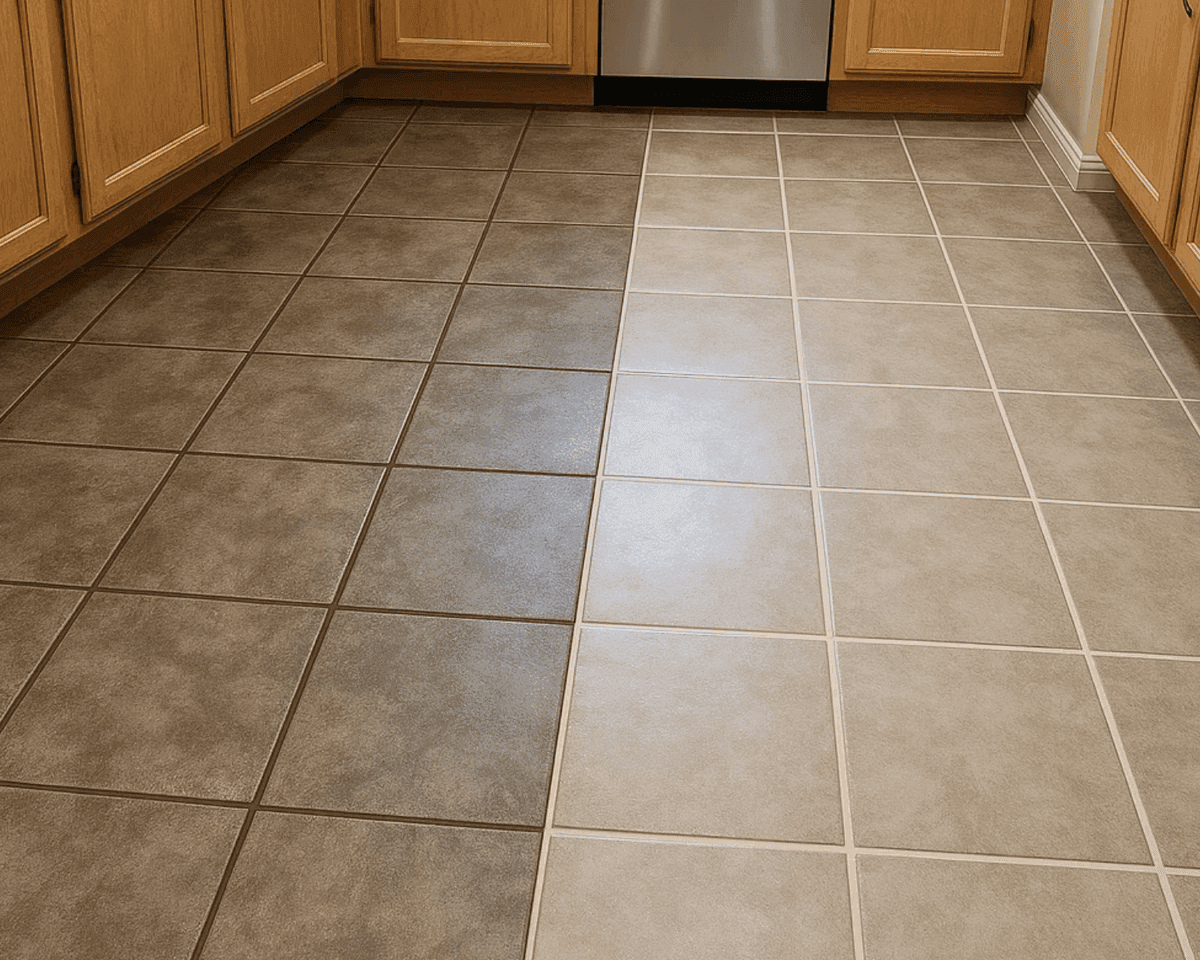
The tile is the easy part. Grout is where the real problem lives. Grout is porous — it absorbs mop water, soap residue, cooking grease, foot grime, and everything else that contacts the floor over years of daily use. No household mop reaches deep enough to shift what's embedded in those porous lines. That's why a floor you mop faithfully every week can still have grout that looks progressively darker each year. If you've been considering tile and grout cleaning in Irmo, SC, the professional service is specifically addressing that embedded contamination.
We clean tile and grout by matching a solution to the surface, then driving it into those porous channels with a rotary floor buffer. The buffer's bristles drop below the tile edge and scrub the recessed grout line itself, which is the part a flat mop glides right over. A clean rinse and mop-up follows so no chemical residue stays behind. The tile surface gets cleaned in the process, but grout restoration is where the real transformation happens.
Most homeowners who contact us have one room that's been nagging at them. The kitchen floor that used to look clean and bright. The master bath where the grout has gone from white to gray. The front entryway that absorbs the worst of every shoe that comes through the door. All of those are resolvable in a single appointment.
Where this service creates the biggest impact
Kitchens
Kitchen tile endures the toughest combination of foot traffic and contamination. Aerosolized cooking grease settles on the floor gradually. Mop water pushes it down into grout lines. The buildup is so incremental that you don't register the change until the grout looks permanently discolored. The areas around the stove, the island, and the traffic path from the refrigerator to the sink are consistently the worst. They clean up well because the discoloration is almost always accumulated soil, not structural damage to the grout.
Bathrooms
Shower floors are a category unto themselves. Soap scum, hard water mineral deposits, body oils, and humidity that never fully dissipates between uses create the ideal environment for mold and mildew to establish themselves in grout lines. The tile around the toilet base is another frequent trouble spot, particularly in households with young boys. No judgment — just cleaning.
Shower grout is a deep enough subject that Safe-Dry built an entire site around tile. The guide to deep cleaning shower tile and grout on Tile Done Right explains what soap scum actually is, why it bonds to grout, and how it differs from hard water film, with companion pieces on haze, discoloration, and porcelain versus ceramic. Worth a few minutes of reading before your appointment.
Hallways and entryways
Heavy-traffic corridors show soil in grout lines faster than any other area. Entryways are worst because outdoor grit — including the fine Piedmont red clay that's everywhere in the Irmo area — gets ground in with every pair of shoes. A good entry mat intercepts some of it, but only some.
Mudrooms, laundry rooms, and garages
Utility spaces tend to fall off the regular cleaning rotation, and the grout reflects that neglect. Mudroom floors that absorb wet shoes and dog paws through SC's rainy seasons accumulate a layer of grime that regular mopping barely scratches.
Commercial spaces
Office lobbies, retail floors, restaurant entryways, and commercial bathrooms all need professional tile and grout cleaning on a recurring schedule. The foot traffic volume in a commercial setting accelerates grout soiling by a factor of five to ten compared to a residence. If you operate a business along the Harbison corridor or St. Andrews Road, contact us about a maintenance plan.
Our 5-step tile and grout cleaning process
1. Assessment and inspection
We evaluate the floor before touching it. We identify tile type, assess grout condition, note cracked or missing grout lines, and map out the spots where soiling runs deepest. If there's damage that cleaning can't resolve — cracked tiles, grout that's eroded down to the substrate — we'll flag it before starting.
We also ask what products you've been using on the floor. Some household cleaners leave a buildup on tile that affects how our solutions interact with the surface. Knowing what's already there helps us calibrate.
2. Pre-treatment of grout lines
We apply a grout-specific cleaning solution and allow it to dwell. Dwell time is where most amateur attempts fail. People spray product and immediately start scrubbing, which doesn't give the solution time to break down embedded soil. We let the chemistry work for several minutes before any physical agitation begins.
For natural stone tile, we switch to a pH-neutral cleaner. Acidic products and natural stone are a destructive combination. More detail on that below.
3. Floor buffer scrubbing
Following adequate dwell time, we run a rotary floor buffer across the room. The spinning brush carries the solution down into the recessed grout lines, and that reach is the whole advantage. A mop head sits flat and rides across the tops of the tiles. The buffer's bristles drop into the channel between them and physically break the bond between embedded soil and the grout material. On heavily soiled floors, this step is the difference between modest improvement and a floor that looks close to its original installation.
The tile surface gets scrubbed in the same passes, though it's typically in far better shape than the grout. Tile is non-porous or minimally porous and doesn't trap contaminants the way grout does.
4. Rinse and mop-up
Once the buffer has done its work, the loosened soil sits on the surface in the spent solution. We rinse the floor with clean water and mop everything up, working in sections so nothing dries back into the grout. No pressure, no special machinery at this stage. The chemistry and the scrubbing already did the hard part; the rinse just carries it away.
5. Final inspection
We walk the floor with you after completion. We'll point out any grout lines that responded differently than the rest (previous repairs or different grout formulations sometimes react inconsistently), flag tiles with issues, and note anything else worth knowing. We wipe down adjacent baseboards and hand-clean the edges and corners the buffer couldn't fully reach.
Types of tile we clean
Ceramic and porcelain
The most common residential tile types and the most uncomplicated to work with. Both handle our standard cleaning process without special considerations. Porcelain is denser and less porous than ceramic, so it typically presents in slightly better condition, but both respond well.
Natural stone: travertine, marble, slate, and limestone
Natural stone demands a modified approach. Most of these stones react negatively to acidic cleaners, and many standard grout products are acidic. Marble is the most sensitive. We use pH-neutral products on all natural stone and adjust our technique to prevent etching or surface dulling.
If your home has marble tile, we'll discuss specifics on the phone before arrival. Marble and acidic cleaners don't mix, and leaving a floor looking worse than we found it isn't something we're interested in. Travertine has natural pits and voids that trap dirt, requiring a slightly modified scrubbing approach. Slate is more durable but its uneven surface creates variable grout depths.
Terracotta and saltillo
These tiles require case-by-case evaluation. They're soft, porous, and typically sealed with a topical (surface) sealer rather than a penetrating one. The cleaning process differs, and an incorrect approach can strip the existing sealer. Call us, describe what you have, and we'll confirm whether it falls within our scope.
Maintaining tile and grout after cleaning
No special routine is required, but a handful of habits extend the results significantly.
Address spills promptly. This single habit does more than anything else. A spill sitting on worn grout for an hour will stain. The same spill wiped up within minutes usually won't.
Skip harsh chemicals on grout. Bleach-based cleaners produce short-term results but they're hard on grout over repeated use. A pH-neutral tile cleaner is a better choice for ongoing maintenance.
Use appropriate tools. A stiff wire brush on grout feels productive but actually roughens the surface and creates more texture for dirt to grip. Soft-bristle brushes or a microfiber mop are better for routine use.
Schedule professional deep cleaning. Once a year is sufficient for most homes. Kitchens and bathrooms with heavy daily use benefit from cleaning every six to eight months. Commercial spaces typically need quarterly attention to stay presentable.
How long does it take
A standard kitchen and bathroom combination usually runs 90 minutes to two hours. A full main level of tile in a larger home might take half a day. The floor is walkable as soon as we finish mopping up. It's barely damp by the time we pack the equipment.
Combine tile and grout cleaning with a carpet cleaning or hardwood floor cleaning if you're doing a whole-house reset. Most customers who book one hard-surface cleaning end up adding another while we're already on-site.
Book tile and grout cleaning
Call us at 803-302-7949 or request a quote online. We serve Irmo, Harbison, Lake Murray, Ballentine, and every community across the Dutch Fork area.