Our antibacterial carpet treatment in Irmo, SC is an add-on that follows a standard cleaning. It doesn't replace the cleaning itself. The concept is straightforward: once the carpet or upholstery has been properly cleaned, we apply an EPA-registered sanitizer that reduces bacteria, fungi, viruses, dust mites, and odor-causing microbes living in the fibers.
This service makes sense for roughly half the households we visit and not for the other half. That distinction is worth being honest about.
If your home has pets, allergy sufferers, young children spending time on the floor, or you're resetting after someone in the house was sick, the sanitizer provides a layer of protection that cleaning alone can't fully deliver. If your household is pet-free, nobody has allergy issues, and the carpet sees moderate use, the standard carpet cleaning probably handles what you need on its own.
Who benefits from this treatment
Pet households. Dogs and cats deposit bacteria, dander, and outdoor organisms into carpet fibers daily. Multiple animals or pets that sleep directly on carpet magnify the accumulation. The sanitizer reduces the bacterial load that builds between professional cleanings.
Allergy and asthma sufferers. Dust mites rank among the most common indoor allergens, and they colonize carpet fibers aggressively. Our treatment includes an anti-allergen component that deactivates dust mite allergens on contact. If someone in your home relies on allergy medication year-round or reaches for an inhaler indoors, this treatment is worth a conversation.
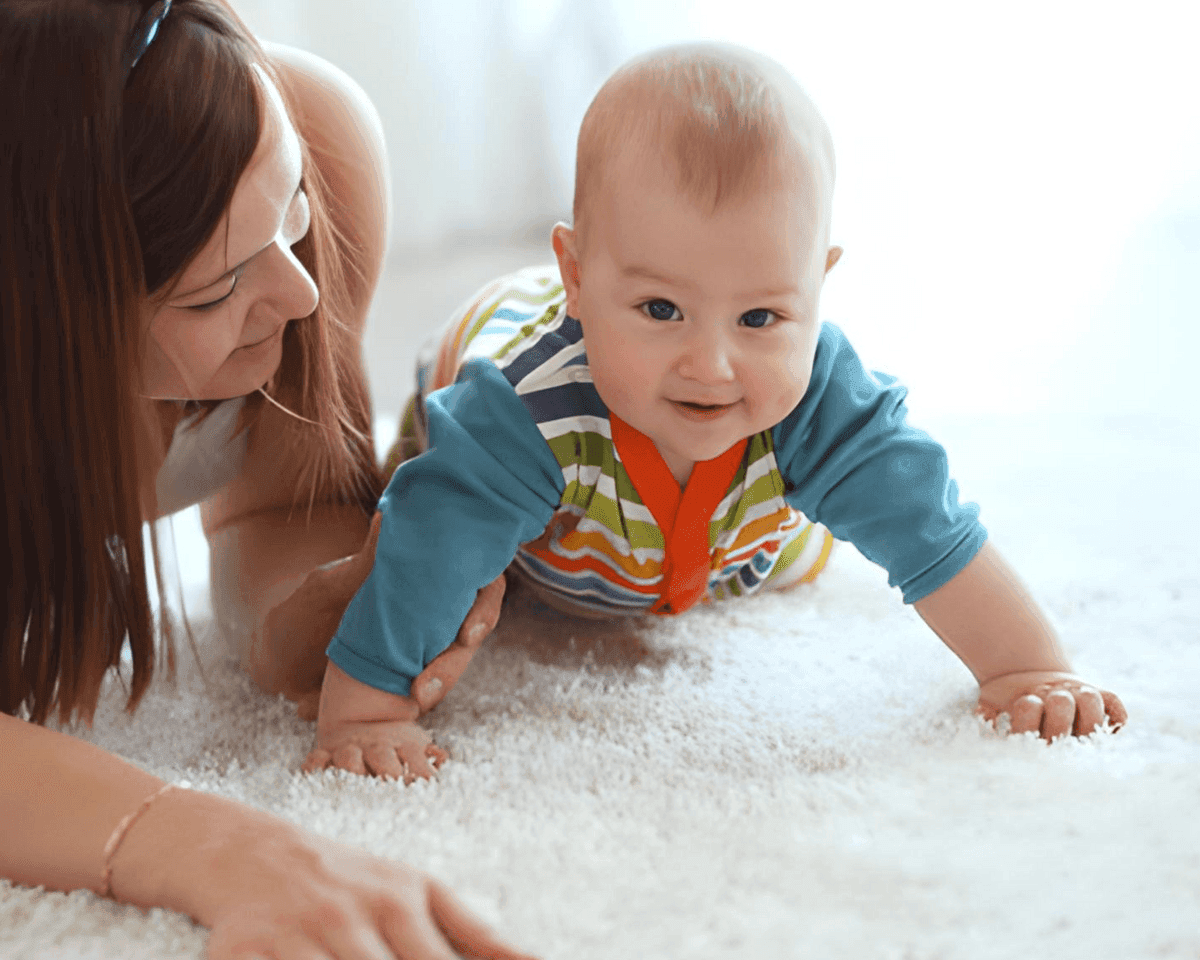
Families with young children. Toddlers and crawling infants spend substantial time with their faces close to carpet fibers. Toys land on the floor and go straight into mouths. A sanitized carpet isn't sterile — nothing short of an autoclave achieves that — but it carries a meaningfully lower bacteria and allergen count at the surface where small children interact with it.
Post-illness recovery. After the flu, a stomach virus, or any contagious illness runs through a household, soft surfaces harbor those microbes longer than hard ones. A cleaning followed by sanitizer application is the closest you'll get to a genuine reset without replacing the carpet entirely.
Rental property turnovers. When a unit changes tenants or a home goes on the market, a sanitizer treatment on carpet and upholstery demonstrates care and eliminates whatever the previous occupants left behind in the fibers — which is sometimes more than anyone wants to think about.
New baby preparation. Nesting instinct drives a lot of practical decisions, and this is one of the more useful ones. Clean the carpets, sanitize them, and the nursery starts out as fresh as it's going to get.
What's in the sanitizer
The product is EPA-registered, non-toxic, and formulated specifically for use on carpet and upholstery. No bleach. No ammonia. No aggressive synthetic fragrances. A light clean scent is present during application and fades completely once the surface dries.
It's safe for pets and children as soon as it's dry to the touch. We can provide the product data sheet on request if you want to review the ingredient list yourself. We've had customers with chemical sensitivities ask about this, and the answer has consistently been straightforward — the formulation was designed for homes with families and animals.
No harsh chemicals, no synthetic dyes, no residue that changes the feel or appearance of the carpet. The fibers feel identical afterward.
Our 6-step sanitizer process
1. Assessment and fabric identification
Before applying anything, we determine exactly what we're treating. Carpet fiber type, upholstery fabric, and material condition all influence our approach. Wool carpet receives different consideration than nylon. Silk upholstery is a different conversation than microfiber.
We also identify areas requiring targeted attention: pet accident zones, high-traffic corridors, areas near exterior doors where outdoor allergens concentrate, and spots where dust accumulates — under furniture edges, along baseboards, inside closets.
2. Pre-treatment and dust removal
The sanitizer performs best on clean fibers, which is why it functions as an add-on to a cleaning rather than a standalone service. But even after thorough cleaning, we make a final pass to confirm loose dust and debris are cleared. The sanitizer needs direct contact with fibers, not a dust layer sitting on top.
3. EPA-registered disinfectant application
We apply the sanitizer as a fine, uniform mist across the carpet or upholstery surface. Application is controlled for complete coverage without saturating the material. It reaches the fiber depth where bacteria and allergens reside, not just the surface tips.
The EPA registration is meaningful because it confirms the product has undergone testing and verification for the claims it makes. Not every "sanitizer" product on retail shelves meets that standard.
4. Deep penetration and allergen reduction
The treatment penetrates into carpet fibers and begins working on contact. It targets bacteria, fungi, viruses, and dust mite allergens simultaneously. The anti-allergen component uses a proprietary formulation that deactivates allergens rather than simply masking them.
This distinction matters. A fragrance spray or a deodorizer covers up symptoms. This treatment actually reduces the biological load within the fibers. The difference shows up in allergy symptom relief for sensitive family members — not just in how the room smells.
5. Long-lasting protective layer
The sanitizer doesn't evaporate entirely or wash out with the first vacuum pass. It deposits a residual protective layer that continues functioning for weeks after application. This isn't a visible or tactile coating. It operates at the fiber level, providing ongoing defense against new bacteria and allergens that settle on the carpet between cleanings.
The protection does diminish gradually, which is why we suggest the treatment once or twice annually for most households. But the initial bacterial and allergen reduction is substantial, and the residual protection extends the benefit well past the application date.
6. Final inspection and quick drying
We verify that coverage is complete and consistent across all treated surfaces. Drying time mirrors a standard cleaning — roughly an hour for carpets, a couple of hours for upholstery. The sanitizer doesn't require extraction afterward. It's designed to air-dry into the fiber structure.
Pets and children can return to treated surfaces as soon as everything feels dry to the touch.
What it targets
Bacteria. The sanitizer eliminates a large percentage of common household bacteria on contact. This includes the bacteria responsible for carpet fiber odor, bacteria pets carry in from outside, and general surface bacteria from daily foot traffic.
Fungi and mold spores. Carpet in humid climates — and the SC Midlands absolutely qualifies — can harbor mold spores even when no visible mold is present. The treatment reduces the fungal population within the fibers. This isn't a mold remediation service, but it's a meaningful contribution to overall carpet hygiene in a region where humidity rarely lets up from late spring through early fall.
Viruses. The EPA-registered formulation is effective against a range of common viruses. For post-illness situations, this is the primary benefit.
Dust mites and allergens. Dust mites are microscopic and they populate carpet fibers by the millions in most homes. Vacuuming alone can't remove them all. The treatment deactivates the proteins in dust mite waste that trigger allergic responses. It addresses pet dander allergens through the same mechanism.
What it does and doesn't do
It reduces the biological contamination in your carpet and upholstery by a large margin. It provides residual protection for weeks. It creates measurable improvement for allergy sufferers and establishes a cleaner environment for children and pets.
It won't render carpet sterile. Nothing will. It's not a substitute for regular vacuuming or for addressing spills and accidents promptly. Think of it the way you'd think of sanitizing a kitchen counter: valuable when you want a thorough reset, and it keeps things cleaner for a period of time, but it doesn't eliminate the need to wipe the counter down regularly.
It's also not a targeted pet odor solution. If a specific location has been hit by repeated pet accidents, the smell originates from the pad beneath the carpet, not the fibers on top. Our pet odor service is built for that situation — it treats all three layers. The sanitizer addresses surface-level bacterial odor but can't reach urine that has soaked into the padding.
Pairing the sanitizer with other services
The sanitizer is designed to follow a cleaning, so the most logical combinations are:
Whole-house carpet cleaning. This is our most popular pairing. Clean everything, then sanitize everything. The sanitizer application adds about 15 to 20 minutes, and the cost is modest relative to the cleaning itself.
Upholstery cleaning. A well-used sofa accumulates biological material at rates comparable to the carpet beneath it. Body oils, pet dander, food particles, and dust mites all build up in fabric cushions. If the carpet is getting sanitized, doing the sofa and chairs at the same time is a natural extension.
Area rug cleaning or oriental rug cleaning. Rugs in households with pets benefit from the sanitizer the same way carpet does. We adjust application for the specific fiber type.
Pre-baby deep clean. Carpets, upholstery, and the nursery rug. Parents preparing for a newborn frequently book this combination in the last month or two before the due date.
Post-illness whole-house treatment. After a flu or stomach bug circulates through the family, treating all soft surfaces in one visit provides the most thorough reset.
How often to do it
Once or twice a year handles the needs of most households. More frequent applications start yielding diminishing returns. The sanitizer won't accumulate or damage fibers with repeated use, but the marginal benefit of quarterly application over semi-annual application is minimal.
For homes with both pets and allergy sufferers under the same roof, twice a year is typically the right frequency. Schedule it alongside your regular carpet cleaning to avoid extra appointments.
For post-illness treatments, timing is reactive — do it when the need arises, regardless of any maintenance schedule.
Add it to your next cleaning
Call us at 803-302-7949 or request a quote online and mention the sanitizer add-on. We serve Irmo, Harbison, Lake Murray, Ballentine, Seven Oaks, St. Andrews, and the surrounding communities. If you're not sure whether the treatment makes sense for your household, ask. We'll give you a direct answer.