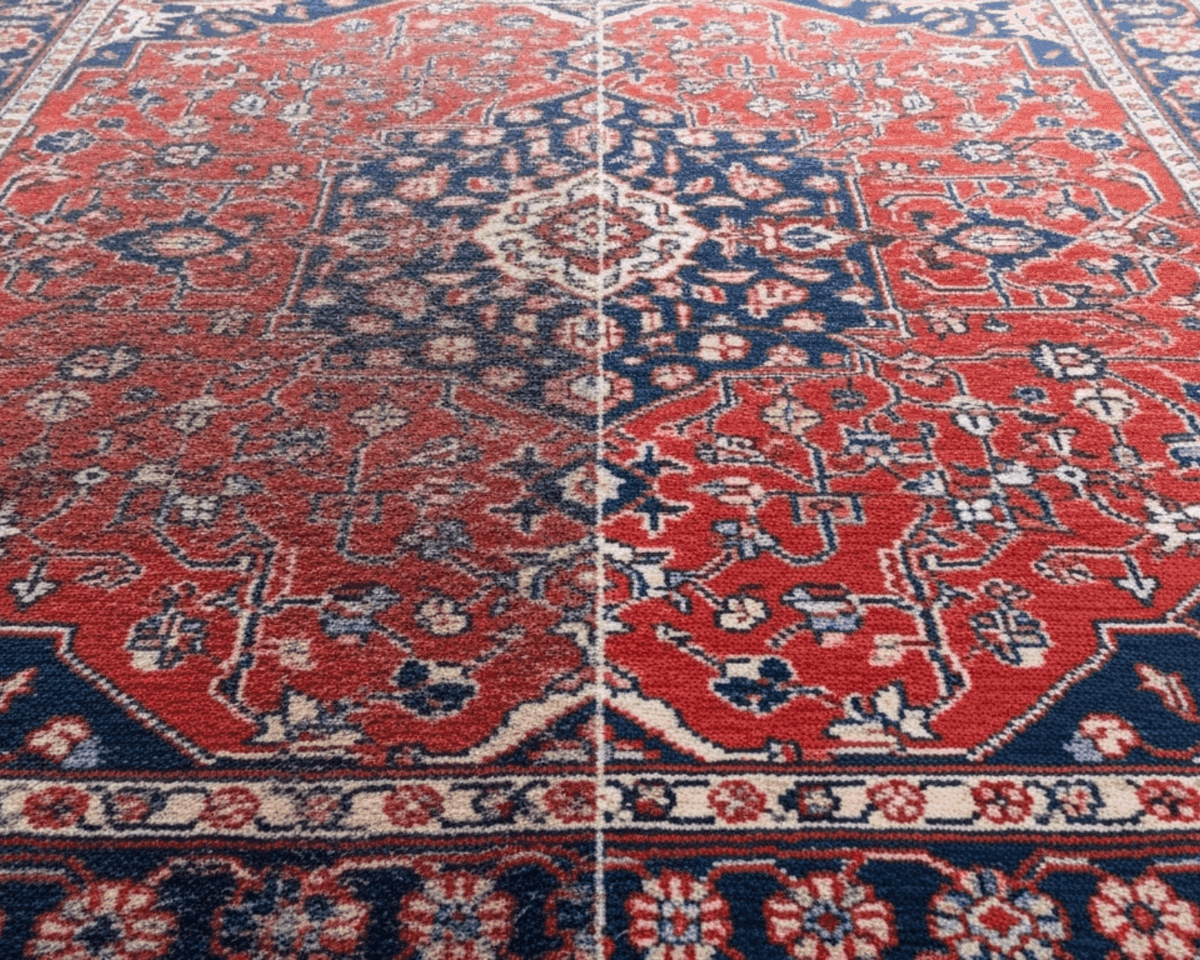
Area rugs catch everything the rest of your floor doesn't. The dining room rug absorbs food spills from weeknight dinners. The entryway runner collects red clay grit from every shoe that crosses the threshold. The playroom rug becomes a science experiment of juice stains, crayon marks, and whatever the dog dragged through the house. If you've been looking into area rug cleaning in Irmo, SC, you've probably weighed two options: drag the rug to a facility and go without it for a week, or have it cleaned where it sits.
We handle both. The majority of rugs get cleaned right in your home — faster turnaround, no hauling a heavy rug to your car, and you can see exactly what's happening during the process. For rugs that need extended treatment time or deeper work, we offer pickup and delivery so the rug goes to our facility and comes back to you when it's ready.
Our cleaning method uses a carbonated, chemical-free solution that's effective on embedded dirt but gentle on fibers. The carbonated bubbles get beneath soil particles and lift them to the surface for extraction. There's no steam flooding the rug with water that soaks through the backing and sits for days. The rug stays lightly damp during cleaning and dries within hours.
Why in-home cleaning handles most situations
The recommendation to send every rug out for plant cleaning is overly cautious for the majority of rugs people actually own. That advice applies to antique handmades, delicate silks, and rugs with structural damage. For the machine-made wool, wool-blend, and synthetic area rugs that fill most Irmo homes, in-home cleaning delivers excellent results at a lower cost.
We clean area rugs in homes throughout the Dutch Fork corridor and Harbison area every week. The vast majority don't require a full submerge wash at an off-site facility. What they need is the embedded grit pulled from the foundation, the stains treated, and the pile refreshed. Our in-home process accomplishes all three.
If we assess your rug and believe it genuinely needs plant treatment, we'll say so. If it's a valuable hand-knotted oriental piece, we'll direct you to our oriental rug service, which uses a specialized approach for those constructions. But for everyday area rugs, in-home service is typically the right move.
When pickup and delivery is the better option
Certain situations benefit from taking the rug off-site. Heavy pet contamination that requires extended dwell time for enzyme treatments is one. A large rug in a fully furnished room where we can't access the full surface is another. Some customers just prefer having the work done while they're away on a Lake Murray weekend or traveling for the holidays.
For those cases, we pick the rug up, clean it at our facility, and deliver it back on a timeline we agree on before we take it. The cleaning process is identical. The difference is environment — at our facility, we can let treatments work longer without being constrained by your living room layout or schedule.
Rug types we work with
Every fiber behaves differently under cleaning, and knowing those differences drives how we approach each rug.
Wool. The workhorse of quality area rugs. Wool fibers are naturally resilient and resist soiling better than most materials, but wool absorbs moisture and can shrink or felt under excessive water or aggressive agitation. Our low-moisture carbonated method is a strong match for wool because it cleans thoroughly without saturating the fiber.
Silk. Gorgeous but temperamental. Silk fibers have strength when dry but weaken considerably when wet. Color migration is a real risk. We clean silk rugs with an even lighter touch and always test for colorfastness in a hidden spot before proceeding. Some silk rugs are genuinely better served by a specialty facility, and we'll tell you if yours falls in that category.
Nylon. Highly durable and common in moderately priced area rugs. Nylon handles moisture without complications and stains generally respond on the first cleaning pass.
Polyester. Comparable durability to nylon, with natural resistance to water-based stains — which is why it shows up in so many family room and kids' bedroom rugs. The tradeoff is increased susceptibility to oil-based stains, so greasy marks need targeted pre-treatment.
Cotton. Typically found in flat-weave and low-pile constructions. Many cotton rugs are washable at smaller sizes, but larger pieces can shrink, and colors may run. We test before committing to a method.
Olefin (polypropylene). The most budget-friendly option. Olefin resists both stains and moisture, making it cooperative to clean. The downside is that it crushes and mats under traffic, and no cleaning reverses that physical damage. What we can do is remove the dirt and oils that amplify the worn appearance.
Jute and sisal. These plant-based fibers trend in and out of popularity, but they remain the most moisture-sensitive rugs we encounter. Jute and sisal can brown from water contact alone as the fibers wick moisture upward. They can shrink, and they dry slowly. We use an ultra-low-moisture approach on these and set realistic expectations. They clean up noticeably, but they won't emerge looking like a freshly washed wool rug.
Blends. Plenty of rugs combine two or more of the above — wool-cotton, wool-silk, nylon-polyester. We identify the blend composition and adjust our approach to accommodate the most sensitive fiber in the mix.
The 6-step cleaning process
1. Inspection and assessment. We examine fiber content, construction type (hand-knotted, hand-tufted, machine-made, flat-weave), foundation integrity, edge condition, and stain types. A hand-knotted Afghan wool rug receives fundamentally different treatment than a machine-made polyester rug from a big-box retailer, even when the dimensions and stain patterns look similar.
We also run a colorfastness test. Certain rugs, particularly those with hand-applied dyes, bleed when exposed to moisture. We test in a discreet spot before moving forward.
2. Dusting and dry soil extraction. This step gets skipped in nearly every DIY attempt, yet it produces the single biggest visual improvement. A rug that's been on the floor for a year holds a remarkable volume of fine grit deep in its foundation. Surface vacuuming only addresses the top layer. We mechanically agitate the rug to shake loose the embedded sand and dirt particles packed at the base of the pile.
Skipping this step and going straight to wet cleaning is counterproductive — you end up grinding dirty water through the fibers, effectively sanding them from below. Dusting first protects the rug and makes the wet cleaning far more effective.
3. Pre-treatment. Stains and high-traffic zones receive targeted pre-treatment matched to the stain chemistry. Food stains, pet marks, wine rings, and mystery spots each get the appropriate product. The pre-treatment gets time to work before the main cleaning pass begins.
4. Deep cleaning with carbonated solution. The carbonated cleaning solution is the backbone of our process. Millions of microscopic bubbles work beneath dirt particles and float them to the surface. It's a gentler mechanical action than steam pressure or rotary scrubbing, which matters especially on delicate fibers.
We work the solution through the pile and extract everything — dirt, cleaning solution, allergens, dust mites. The rug comes out slightly damp rather than wet. The backing stays dry. The floor underneath doesn't get soaked.
5. Spot treatment. Stains that persisted through the main cleaning receive a second targeted round. Pet accidents may get enzyme treatment. Persistent food or beverage marks may get an oxidizing agent. We spend the time this step requires because it's frequently the difference between acceptable results and results you're genuinely happy with.
6. Grooming, inspection, and placement. We brush the pile to restore the rug's natural texture and visual consistency. Then we do a final walkthrough with you. If the rug was picked up, we deliver it back and help get it positioned where you want it.
Why regular rug cleaning matters
Healthier indoor air. Area rugs trap dust, pollen, pet dander, mold spores, and bacteria — keeping those particles out of the air you breathe. Over time the rug saturates and stops filtering effectively. Cleaning resets its capacity and reduces the allergen concentration in your home. For households managing allergies or asthma, the impact is measurable.
Fiber protection. Embedded grit destroys rug fibers faster than anything else. Those tiny particles act as abrasives under foot traffic, shearing filaments from the inside. That's the source of the worn, flattened look in high-traffic paths. Routine cleaning removes the grit before it causes irreversible damage — particularly important for wool rugs that represent a real financial investment.
Stain and odor removal. Certain stains bond permanently to fibers over time. Wine, coffee, and pet urine are all easier to remove when addressed quickly than after months of setting. If you're living with a stain that bothers you, calling sooner gives you better odds.
Gentle handling of delicate fibers. Our carbonated method avoids the problems that aggressive cleaning creates. No fiber distortion, no color bleeding (we test first), no shrinkage from over-saturation. The bubbles do the heavy lifting without brute force.
Longer rug lifespan. A quality area rug is a real purchase. Wool rugs from reputable makers range from several hundred to several thousand dollars. Oriental rugs can be worth far more. Professional cleaning on a regular basis extends the functional life of any rug significantly. It costs substantially less than replacing one.
What we don't recommend trying at home
The carpet cleaning machines available at grocery stores handle low-traffic wall-to-wall carpet reasonably well, but they create problems on area rugs. They deposit too much water, provide insufficient suction, and leave detergent residue in the fibers. That residue is why a rug you cleaned yourself looks good for two weeks and then somehow appears worse than before — dried detergent actively attracts airborne dirt and bonds it to the fiber surface.
Over-the-counter spot treatments carry similar risks. Some work. Many set stains or bleach colors out of wool and silk. If you're facing an unidentified stain, a phone call before grabbing the nearest spray bottle usually saves you from making things harder to fix.
Pressure washing a rug on the driveway is something we see the aftermath of regularly. It works on certain synthetics. It destroys wool, damages fringe, and can delaminate hand-tufted rugs by blasting the adhesive off the backing.
Construction types worth knowing about
For anyone curious about what they own, here's a quick overview of the construction types we encounter:
Machine-made rugs have uniform, consistent pile and the backing material is visible on the underside. These make up the majority of the rugs we clean. Durable and straightforward to work with.
Hand-tufted rugs feature a fabric backing adhered with glue. That adhesive can deteriorate over time and with moisture exposure. We keep water to a minimum on these to prevent delamination.
Hand-knotted rugs are the most labor-intensive construction and typically the most valuable. Individual knots are tied by hand, producing tremendous durability but sometimes more sensitive dyes. Our oriental rug cleaning service is built specifically for these pieces.
Flat-weave rugs (kilims, dhurries) have no pile. They're thinner, dry faster, and shift more easily on hard floors. We take care during cleaning to prevent stretching or distortion.
Book area rug cleaning
Call us at 803-302-7949 or request a quote online. We serve Irmo, Harbison, Lake Murray, Ballentine, Seven Oaks, St. Andrews, and every other community in the Dutch Fork area. If you're unsure whether your rug needs in-home cleaning or our oriental rug service, describe it when you call and we'll steer you the right direction. We also frequently combine rug cleaning with carpet cleaning or upholstery cleaning in a single visit if you want to handle everything at once.