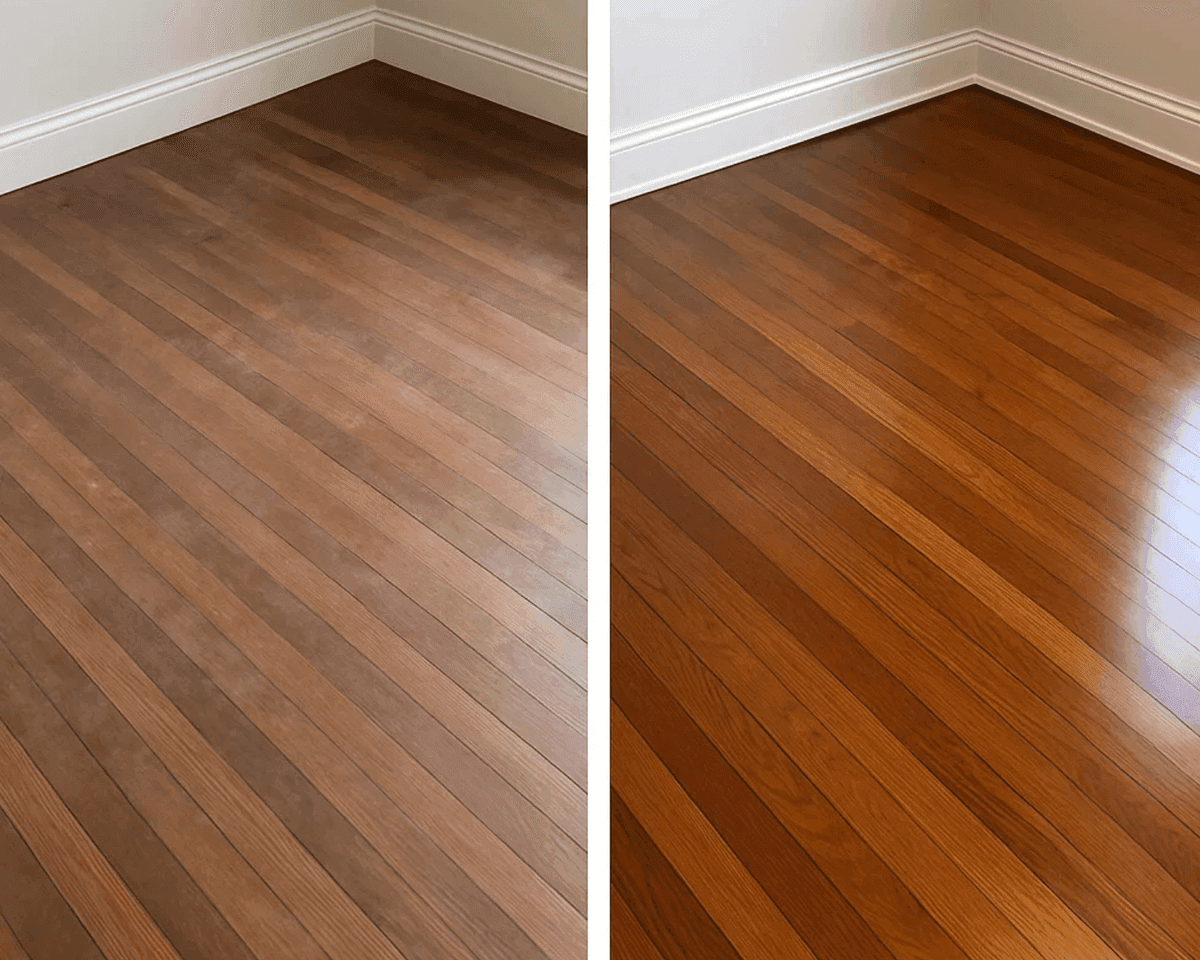
Hardwood floor cleaning in Irmo, SC requires a lighter hand than carpet or tile work, but there's more room for error. Excess water warps planks. The wrong cleaning solution dulls the finish. Those spray-mop products promising a glossy shine typically leave a film that accumulates over months and makes the floor look cloudy rather than clean. We've worked on floors where the primary issue wasn't age or traffic — it was years of the wrong product applied weekly.
We clean hardwood with a residue-free, pH-neutral solution and eco-friendly equipment that lifts surface grime without soaking the wood or depositing anything on the finish. It's safe on polyurethane-coated oak, engineered hardwood, and most standard prefinished flooring. The entire objective is to get the floor genuinely clean without introducing a new set of problems.
What this service is and what it isn't
This is a professional deep clean that resets hardwood floors after years of regular household use. It's what you do when you want the floor to look the way it did before several seasons of kid shoes, dog paws, pollen tracked in from the porch, and daily life left their mark.
This is not a refinishing. If the floor has real wear — scratches that penetrate through the finish, water staining, or visible wood damage — that's refinishing work for a different contractor. We'll let you know if that's what you're actually facing.
It's not a recoat either. A recoat is a fresh layer of finish applied over the existing one. We don't do that. A proper cleaning delivers roughly 80% of the visual improvement a recoat would produce, without the cost or the need to vacate the house for a couple of days. For many homeowners in the Dutch Fork area, the cleaning turns out to be all that was actually needed.
Where hardwood cleaning makes the most difference
Kitchens
Kitchen hardwood absorbs the worst combination of foot traffic, food splatter, and cleaning product buildup. The zone in front of the sink and the path between stove and refrigerator develop a haze before any other part of the floor. That haze is typically a blend of aerosolized cooking residue and whatever mop solution you've been using, building up on top of the finish.
Living rooms and dining rooms
These are the rooms where dulled hardwood is most conspicuous. Dining room floors under the table take chair-leg scuffs and food drops with every meal. Living room floors develop visible traffic patterns through the finish, especially along the paths connecting doorways.
Hallways and entryways
The entryway is essentially a collection point for everything that comes in on shoes — and in Irmo, that includes Piedmont red clay, fine construction dust from the Dutch Fork building boom, and pollen that coats outdoor surfaces for weeks each spring. All of that grit settles onto hardwood and acts as sandpaper under foot traffic. A professional cleaning removes the embedded particles and restores appearance, but the real value is stopping the ongoing scratch damage.
Bedrooms
Bedroom hardwood typically holds up better than the rest of the house because it sees less traffic and usually no shoes. But it still collects dust, pet hair, and the fine grit that migrates from other rooms. Cleaning it makes a subtle but tangible difference in how the room feels underfoot.
Home offices
Rolling desk chair casters are hard on hardwood. The back-and-forth motion grinds grit into the finish and produces a dulled, scuffed patch under the desk. A chair mat prevents future damage, but cleaning addresses the existing wear and helps the floor look consistent across the full room.
Our 6-step hardwood floor cleaning process
1. Assessment and wood type identification
We examine the floor and determine what we're working with. Solid hardwood with a polyurethane finish gets our standard process. Engineered hardwood, prefinished hardwood, oil-finished floors, and laminate each require slightly different handling.
We also identify problem areas: moisture damage near exterior doors, finish deterioration in high-traffic zones, scratches that penetrate through the finish into wood, and any spots where the subfloor feels soft or sounds hollow when walked on. If something warrants attention beyond what cleaning can provide, you'll hear about it before we begin.
2. Pre-treatment and thorough dust removal
Grit sitting on a hardwood floor scratches the finish with every footstep. Removing it is the single most important step. We vacuum the entire floor with a soft-bristle attachment, then work the edges, corners, and crevices along baseboards methodically. The baseboard edge work produces a bigger visual improvement than most people anticipate — that's where dust and fine grit concentrate most heavily.
We shift lightweight furniture to access the floor underneath. Heavy pieces stay in place, but we get as close to edges and legs as the equipment allows.
3. Deep cleaning with controlled moisture
This is where our approach diverges from both DIY mopping and steam cleaning. We apply cleaning solution in a light, precisely controlled mist. Never pooled. Never poured. Never in sufficient quantity to run into the seams between planks.
Water is the primary threat to hardwood during cleaning. Excess moisture seeps between boards, causes wood to swell, and can produce cupping, warping, or mold growth in the subfloor. Our low-moisture technique avoids that entirely. The floor surface is barely damp during cleaning and never wet enough to endanger the structure beneath.
We work the solution with a soft-pad tool that lifts dirt and buildup without scrubbing the finish. Nothing abrasive contacts the floor surface.
4. Scratch and stain treatment
Surface scratches that exist only in the finish layer — not penetrating into the wood — can sometimes be reduced during the cleaning process. Removing the grime that fills and accentuates scratches diminishes their visibility, and the buffing step can further smooth the appearance.
For stains, we treat what's treatable. Water rings, surface-level pet spots, and darkened traffic-lane discoloration usually improve noticeably. Stains that have penetrated through the finish into the wood grain are a refinishing issue, not a cleaning issue. We won't pretend otherwise.
If a specific stain has been bothering you, point it out during our arrival walkthrough and we'll give you a candid assessment of what cleaning can and can't accomplish.
5. Protective coating and dry-buff
After the cleaning pass, we dry-buff the floor. This is the step that restores sheen without adding product. No residue, no waxy film, no buildup that's going to attract dirt next week.
For floors that would benefit from added protection, we can apply a light maintenance coating that helps the existing finish resist daily wear. This isn't a refinish or a recoat — it's a protective maintenance layer that extends the life of what's already there. We'll recommend it only when it makes a real difference and let you know when the cleaning alone is sufficient.
The result is a floor that looks brighter, feels cleaner underfoot, and shows grain depth again. That cloudy, washed-out appearance from accumulated product buildup and daily traffic disappears.
6. Final inspection
We walk the floor with you and flag anything worth noting: areas where the finish is thinning, spots that may need a refinisher's attention at some point, or zones where the subfloor feels compromised. We also check the baseboards and wipe down any that picked up dust during the process.
Types of hardwood we clean
Solid hardwood with polyurethane finish. The most common installation in Irmo homes and the most straightforward to clean. Oak, maple, hickory, and cherry all perform well with our process.
Engineered hardwood. The top veneer is genuine wood and cleans identically to solid hardwood. The key consideration is that engineered boards have a thinner top layer, leaving less margin for error if previous cleaning products were used aggressively. Our gentle method is well-matched for these installations.
Prefinished hardwood. Factory-applied finishes are typically very durable, and these floors respond beautifully to professional cleaning. The beveled edges between boards can trap dirt, so we give those extra attention.
Laminate. Different process, still safe. Laminate isn't real wood, so it doesn't respond to the same treatments, but we clean it effectively with an appropriate method. Let us know what you have when you call, and we'll adjust accordingly.
Oil-finished wood. Certain custom floors and some European-manufactured planks use an oil finish rather than polyurethane. The care requirements are entirely different. Our standard process could strip the oil, so advance identification is essential. Describe what you have on the phone and we'll determine whether our process is the right fit or whether you need a specialist.
Why regular professional cleaning matters for hardwood
Hardwood floors represent a significant investment, and the finish is the barrier protecting that investment. Once the finish wears through, the raw wood beneath is exposed to moisture, scratches, and staining. Cleaning doesn't add finish, but it removes the grit and product buildup that accelerate finish deterioration.
Consider this: the fine grit embedded in the floor's surface functions like sandpaper beneath every footstep. Regular vacuuming captures the loose particles, but the fine grit bonded to the finish requires professional cleaning to extract. Removing it means the finish lasts longer, which means you're pushing an expensive refinishing project further into the future.
Professional cleaning also contributes to indoor air quality. Hardwood floors collect dust, pet dander, and allergens on their surface. A thorough cleaning removes those particles rather than simply pushing them around the way a dry mop does. Households with allergies or asthma notice the difference.
And it's safe for everyone in the house. No harsh fumes, no toxic residue. Pets and children can be on the floor as soon as it dries, typically within 30 minutes to an hour.
What a clean floor will and won't look like
A proper cleaning eliminates the dulled, hazy appearance that develops from product buildup, mop water residue, and daily traffic. The floor will look brighter, the wood grain will show more depth, and it'll feel cleaner when you walk across it barefoot.
It won't repair scratches, dents, or areas where the finish has worn completely through. A refinisher handles those. It also won't change the wood's color or make a floor appear brand-new. What it does is strip away everything sitting on top of the finish so you can actually see what the floor looks like underneath. Most homeowners find the result better than expected.
Keeping hardwood looking good between cleanings
Felt pads under every furniture leg. The single cheapest thing you can do for hardwood protection. Replace them when they wear thin or detach.
Rugs in high-traffic zones. Entryways, hallways, and the paths your family actually walks every day. A rug intercepts grit before it gets ground into the finish.
No wet mopping. A damp microfiber mop works fine. A soaking-wet mop does not. If you can see water pooling on the floor, that's too much.
Sweep or dust-mop frequently. Every day or two in high-traffic areas. A microfiber dust mop captures the fine grit that a broom just pushes from one spot to another.
Use the correct cleaner. A manufacturer-recommended hardwood cleaner, applied sparingly, once a week or so. Steer clear of products that advertise shine — the shine is residue, and residue accumulates. Vinegar-and-water solutions, while popular in online cleaning advice, can gradually dull polyurethane finishes.
Clean spills immediately. Water sitting on hardwood infiltrates seams between boards. Any spill — including overflow from a pet water dish — should be wiped up right away.
Schedule professional cleaning. Once a year for most households. Every six months for homes with pets, children, or heavy daily foot traffic. It's genuinely protective maintenance, not just cosmetic upkeep.
The haze has a name and a cause
If your complaint is specifically that milky, clouded look no mop touches, our hardwood team wrote a full page on cloudy, hazy hardwood floors: where the film comes from, why more product makes it worse, and what stripping it off involves.
Book hardwood cleaning
Call us at 803-302-7949 or request a quote online. We serve Irmo, Harbison, Lake Murray, Ballentine, Seven Oaks, St. Andrews, and every community on our service area list. If you're uncertain what type of floor you have, describe it when you call and we'll help identify it before we come out.